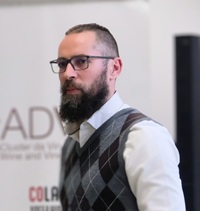
Keynote SpeakerS

Prof. Ghanim Putrus, Northumbria University, UK

Ghanim Putrus is Emeritus Professor at the Department of Engineering, Physics and Mathematics, Northumbria University, Newcastle upon Tyne, UK. He has over 40 years of research experience in Electrical Engineering with over 230 publications, including one patent, 5 book chapters and neuromas invited talks at national and international events. He has led several research projects (funded by EU, EPSRC, Innovate UK and industry) and has often provided consultancy for industry in the area of energy and electrical power engineering, with focus on the integration of renewable energy generation and electric transport. Professor Putrus is Visiting Professor at the China-EU Institute for Clean and Renewable Energy (ICARE), Huazhong University of Science & Technology, Wuhan, China, 2011-to-date. He is also Associate Editor for Elsevier Renewable Energy journal and serves on the editorial board for the World Electric Vehicle Journal and Energies journal in addition to the technical/steering committees for several international conferences. He has been actively involved in the Institution of Engineering Technology (IET) and has organised several conferences and professional events. He was Chairman of the IET Northumbria Network (2004/2005) and served on the executive committee of the IET Power Trading and Control Professional Network (2001-2010). Main research interests are application of power electronics in power systems, renewable energy systems, electric vehicles and their integration into the electricity grid (smart grids).

Speech Title: Can we maintain sustainable, secure and affordable energy and transport systems?

Abstract: Electrical power and transport systems evolved throughout the past century to provide adequate electricity supply and transport that our civilization now rely on. Given the concerns about the security of energy supply and climate change, the challenge now is how to maintain sustainable, reliable and affordable energy and transport systems. Renewable energy generation and electric transport are seen as the way forward to provide sustainable green energy and transport systems. However, the integration of these two systems is not without challenges. This talk will give an overview of the challenges due to increased deployment of renewable energy sources and electric vehicles and the need for a smart integration of the two systems together with the electricity grid. It will also cover opportunities that emerging technologies provide not only to meet these challenges but also to foster new operational and business models that will help maintain reliable and affordable electricity and transport systems as well as improve their efficiency and lower their environmental impacts.

Prof. Belkacem Ouldbouamama, University of Lille, France

Bio: Belkacem OULD BOUAMAMA is full Professor in automatic control at Graduate School of Engineering Polytech Lille (France), where he has been Director of the Research for 15 years. He is in charge of a diagnosis and prognosis research team at the CRIStAL laboratory of the National Center for Scientific Research (CRIStAL, CNRS) in Lille, where his research activities concern Integrated Design for Supervision of System Engineering based on Bond Graph theory. Their industrial applications are mainly, renewable energies and green hydrogen. He has authored and co-authored more 65 peer-reviewed journals, 180 conference papers and 20 books and book chapters. He has given more than 20 invited talks and tutorials and keynotes around the globe. More details are given in https://pro.univ-lille.fr/belkacem-ould-bouamama/

Speech Title: Hybrid Bond Graph-Convolutional Neural Network (BG-CNN) for online diagnosis”

Abstract: In recent years, there has been a lot of interest in Fault Detection and Isolation (FDI) for systems. Model-based methods and Machine Learning (ML)-based approaches have been extensively developed to detect and identify specific faults by taking into consideration, respectively, the mathematical description of the monitored process and the statistical model constructed from historical data. The current data-driven FDI techniques generally emphasize accuracy and rarely draw attention to the lack of readily accessible labeled data in the industry. This conference aims to develop a hybrid fault diagnosis method by combining the well-established graphical technique of Bond-Graph (BG) with the powerful pattern recognition ability of Convolutional Neural Network (CNN) to improve the overall fault isolation performance. A new formalism named BG-CNN method is proposed, which can utilize the residuals generated from the BG model in a CNN for improved fault isolation with a minimal number of labeled data.

Prof. Helena Nadais, University of Aveiro, Portugal

Bio: Helena Nadais is a Chemical Engineer and Assistant Professor at the University of Aveiro, specializing in environmental sciences with a particular focus on water and wastewater treatment processes. Her academic background includes a Master Degree in Chemical Engineering, specializing in Processes and Industry, from Lisbon Technical University and a PhD in Applied Environmental Sciences from the University of Aveiro. Her doctoral research pioneered new methodologies for treating industrial wastewater with an emphasis on energy recovery. Helena Nadais has been a faculty member since 2003, teaching and doing extensive research in the treatment and valorization of water and industrial effluents. She is recognized for her scholarly contributions with an H-index of 19, and she has authored 39 publications in WoS-indexed journals. Her professional engagements include leading and participating in numerous national and international research projects, fostering industry-academia collaborations, and enhancing the application of sustainable practices in environmental management. Helena Nadais is currently involved as scientific researcher in several national and international research projects focusing on material and energy recovery from wastes.

Speech Title: From Wastewater Treatment to Wastewater Biorefineries: Energy and Valuable Organic Products Recovery through Anaerobic Processes

Abstract: The transition towards a circular economy is reshaping the role of wastewater treatment plants (WWTPs), shifting their function from pollution removal facilities to resource recovery systems. Municipal wastewater contains significant amounts of organic matter, nutrients and energy that can be recovered and reused. The extractable energy embedded in wastewater organic matter has been estimated at 2.4kWh per m³, which is typically four to eight times higher than the energy required for conventional treatment (approximately 0.3–0.6 kWh per m³), highlighting the potential for WWTPs to become energy-neutral or even energy-positive facilities. Anaerobic processes are key technologies enabling this transition, as they convert organic matter into renewable energy and valuable biochemical intermediates. Beyond methane production through anaerobic digestion, controlled anaerobic fermentation processes can generate volatile fatty acids and other platform compounds, which can be used as carbon sources for nutrient removal or as precursors for bio-based materials. This keynote will discuss the role of anaerobic technologies in the development of circular wastewater biorefineries, addressing energy balances in WWTPs, emerging opportunities and bottlenecks for liquid and gaseous product recovery, and the importance of microbial community engineering to enhance resource recovery. The presentation will conclude by highlighting research and engineering challenges necessary to fully realize the circular economy potential of wastewater systems.

Prof. Hugo Morais, University of Lisbon, Portugal

Bio: Hugo Morais is a senior researcher at the Portuguese R&D Institute INESC-ID and an Associate Professor at Instituto Superior Técnico, University of Lisbon. With a background in Electrical Engineering (specializing in Power Systems) and a Ph.D. in Electrical and Computer Engineering (2012), he has contributed to over 40 academic and industrial research projects, ranging from national, to French and European funded initiatives. At INESC ID he is the coordinator of four ongoing Horizon Europe projects and is actively involved in the other four. His research primarily focuses on advancing smart grid technologies and tools. He has been actively involved in the development of strategies for electric mobility integration in power systems. Hugo Morais (IEEE Senior Member, 2018) has received 26 awards and authored over 250 scientific papers, including more than 100 published in international peer-reviewed journals, with more than 8,000 citations. He also serves as an editor for several leading scientific journals, including Energies, Electricity Journal, and Frontiers in Energy Research. 

Speech Title: Achievements and Results of EV4EU project

Abstract: This presentation highlights the main achievements and results of the EV4EU project, which aims to accelerate the integration of electric vehicles (EVs) into the power system through smart, secure, and scalable solutions. The project has developed advanced tools and methodologies to enable efficient EV charging management, grid-friendly operation, and seamless interoperability across diverse stakeholders, including system operators, aggregators, and end-users. Key innovations include the implementation of bidirectional charging (V2G/V2X), the integration of EVs into flexibility markets, and the deployment of interoperable communication frameworks based on open standards.


Links

  1. Paper Submission
  2. Manuscript Guidelines
  3. Call for Papers

Contact for Details